Reference point
Crush a fresh cassia leaf and compare it straight away with cassia bark.
Do this before you read on. An entry only works when you have just smelled the thing.
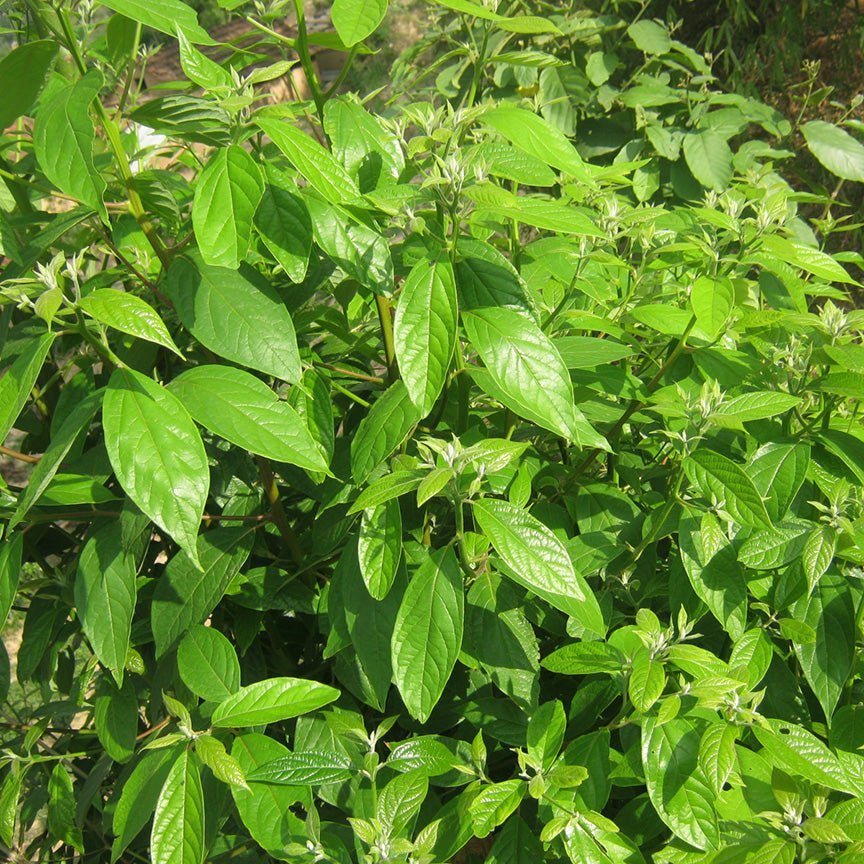
Clove above all, with almost none of the sweetness of the bark. It is flatter, drier, and lacks the feeling of heat entirely.
The pair of cassia bark and cassia leaf is the best example for explaining a principle: a different plant part means a different dominant molecule, and a different dominant molecule means a different smell. There is no such thing as the smell of the cassia tree — only the smell of its bark and the smell of its leaf.
The same principle applies to lime peel and lime leaf, to fresh and dried ginger, to pomelo blossom and pomelo peel. Learn one pair and you learn a whole way of thinking.
How to smell it
Crush a fresh cassia leaf and smell it. Straight afterwards smell a piece of cassia bark. Do it within ten seconds, without a gap — the direct contrast is the lesson, while smelling them apart lets the nose fill the gap with memory.
Why this one is hard
Because of the shared name. Labels that say cinnamon oil without stating bark or leaf are common, and the two are far apart in both smell and price.
Don’t confuse with
This entry
Cassia cinnamon leaf
Spicy family
The bark is sweet and hot; the leaf leans heavily towards clove, with almost no sweetness.
Scientific note
The leaf accumulates eugenol while the bark accumulates cinnamaldehyde. The same genome, two tissues, two different biosynthetic branches. This organ specialisation is far more common than many people think, and it is why a label saying cinnamon oil without saying bark or leaf is an incomplete label.
In Vietnamese life
Cassia leaf is a by-product of harvesting the bark, so cassia leaf oil is many times cheaper. On the Vietnamese market, quite a few bottles labelled cinnamon oil are in fact leaf oil — something a GC/MS analysis shows at once.