Reference point
Crushed fresh eucalyptus leaves.
Do this before you read on. An entry only works when you have just smelled the thing.
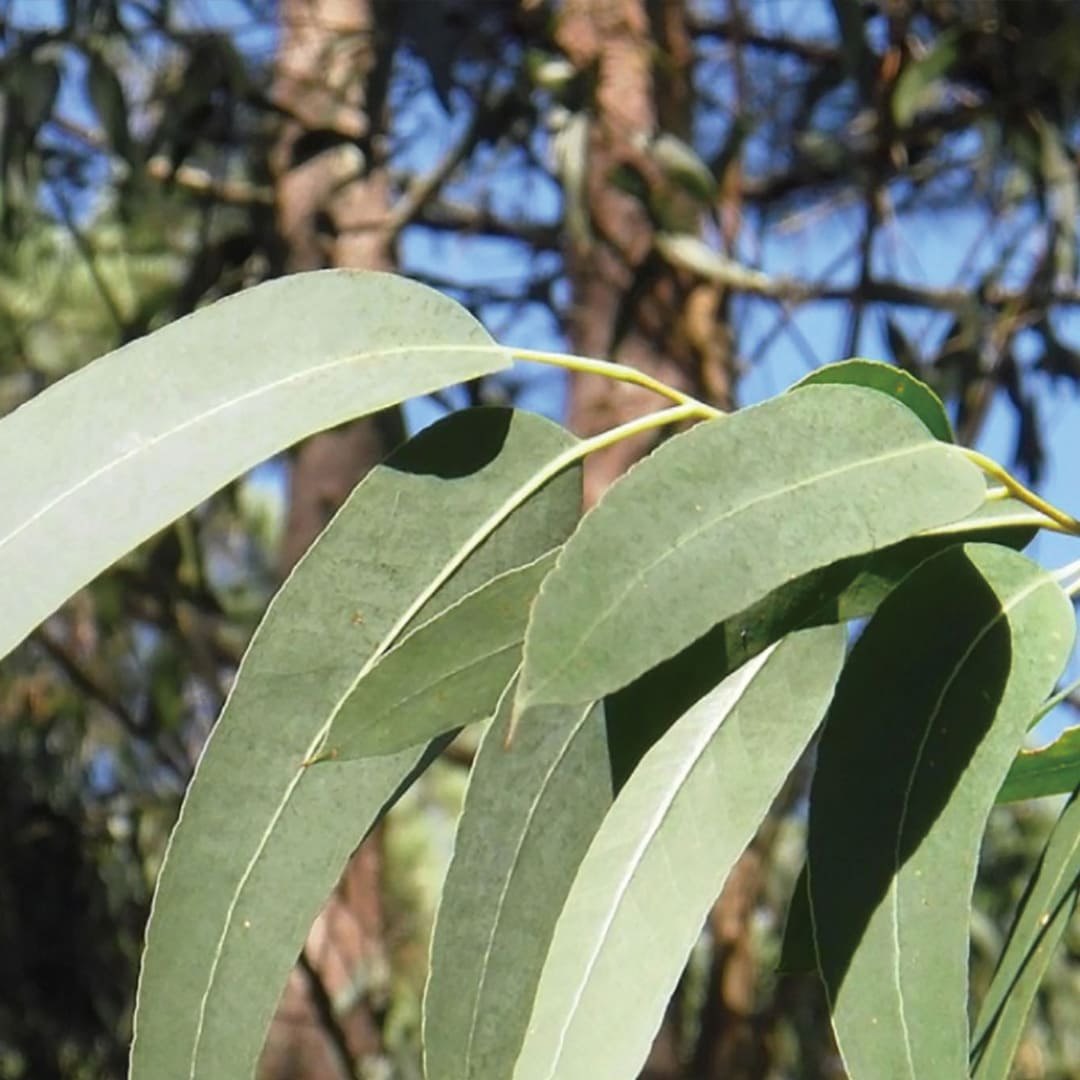
Clean, edged, airy. It opens rather than closes, and that is the main point of difference from camphor.
Less sweet than the medicated balm dầu gió and without the heavy camphor note. A single compound, 1,8-cineole, makes up most of it — so this is the neatest example of the idea of a leading compound: take that compound away and almost nothing is left.
The same compound is found in cajeput leaves, in galangal, in several other eucalyptus species. Recognise it in one place and you recognise it everywhere.
How to smell it
Crush a fresh eucalyptus leaf in your palm and smell at once. Straight afterwards smell a camphor block. The two share a region of smell but go in opposite directions, and smelling them one after the other is the only way to see that clearly.
Why this one is hard
Because the whole medicinal family is lumped into one block in everyday language. People say it smells of medicine, of balm, of oil — nobody separates eucalyptus from camphor from mint.
Don’t confuse with
This entry
Eucalyptus
Medicinal family
Eucalyptus is airy and clean; camphor is heavy, dry and more closed.
This entry
Eucalyptus
Medicinal family
Both are rich in cineole. Cajuput is softer, with a sweet woody note; eucalyptus is sharper, with a clearer edge.
Scientific note
1,8-Cineole makes up most of eucalyptus oil and gives an airy feeling in the nasal cavity. That feeling comes partly from smell and partly from stimulation of receptors on the trigeminal nerve — the same system menthol and capsaicin act on. That is why it reads as cold though the temperature does not change.
In Vietnamese life
Eucalyptus has been planted on a large scale in Vietnam since the mid-twentieth century, mainly for timber and paper, not for its oil. The oil is a by-product, which is why it is cheap for its quality.