Reference point
Put a drop of cajeput oil on a smelling strip and smell after thirty seconds.
Do this before you read on. An entry only works when you have just smelled the thing.
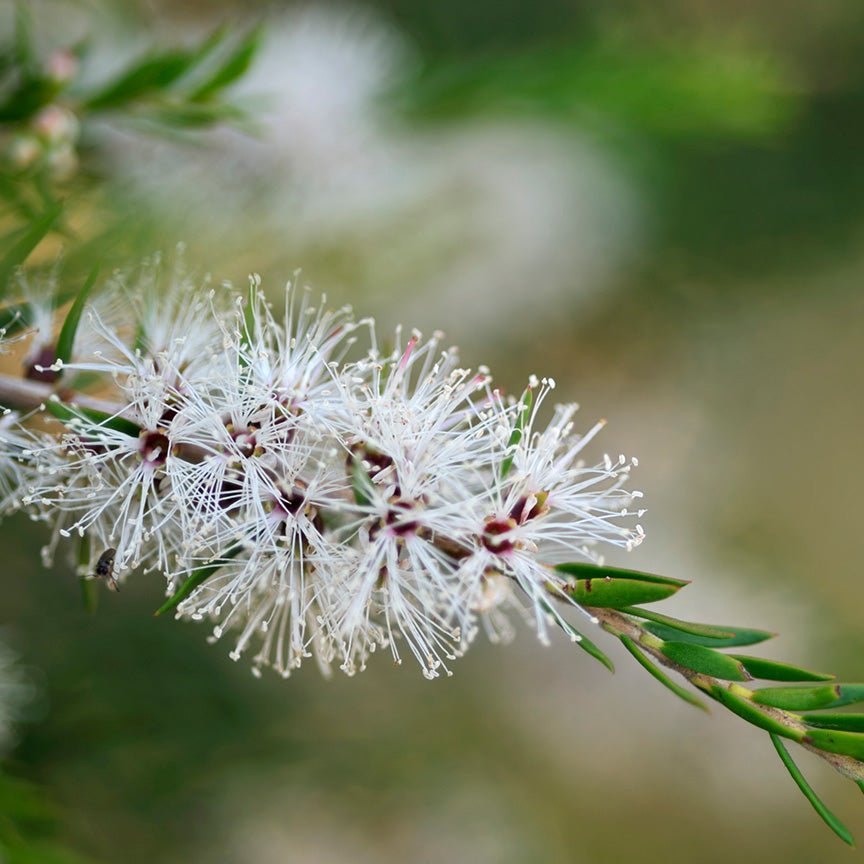
Clean, airy, with a light woody note and a little sweetness. Softer than eucalyptus and less sharp.
Both are rich in 1,8-cineole, but cajuput has extra minor compounds that soften the sharpness, so it reads softer.
Cajuput and tea tree are two different species with quite different profiles, even though their common names are so similar that they are confused all the time.
How to smell it
Put a drop of cajeput oil and a drop of eucalyptus oil on two strips, wait thirty seconds and smell them in turn. What they share is cineole; what differs is the sharpness.
Why this one is hard
Because of the names. Cajuput, tea tree and broad-leaved paperbark are all shortened to tràm on labels.
Don’t confuse with
This entry
Cajuput
Medicinal family
Both are rich in cineole. Cajuput is softer, with a sweet woody note; eucalyptus is sharper, with a clearer edge.
Scientific note
Cajuput and tea tree are two different species, but in Vietnam both are shortened to tràm. Cajuput is rich in 1,8-cineole, so it is airy and cool; tea tree is rich in terpinen-4-ol, so it is earthier and more medicinal. A label that says only tràm is not enough to know what you are buying.
Besides cineole, cajuput oil contains a small amount of terpinen-4-ol together with monoterpenes such as p-cymene and alpha-terpinene. They are the minor compounds that soften the sharpness of the cineole.
In Vietnamese life
The Melaleuca forests of the Mekong Delta and of Hue are a long-standing native source of cajeput oil. Cajeput oil from Hue carries a geographical indication and is one of the few Vietnamese aromatic products under legal protection.