Reference point
Cut a slice of fresh turmeric and smell the cut face.
Do this before you read on. An entry only works when you have just smelled the thing.
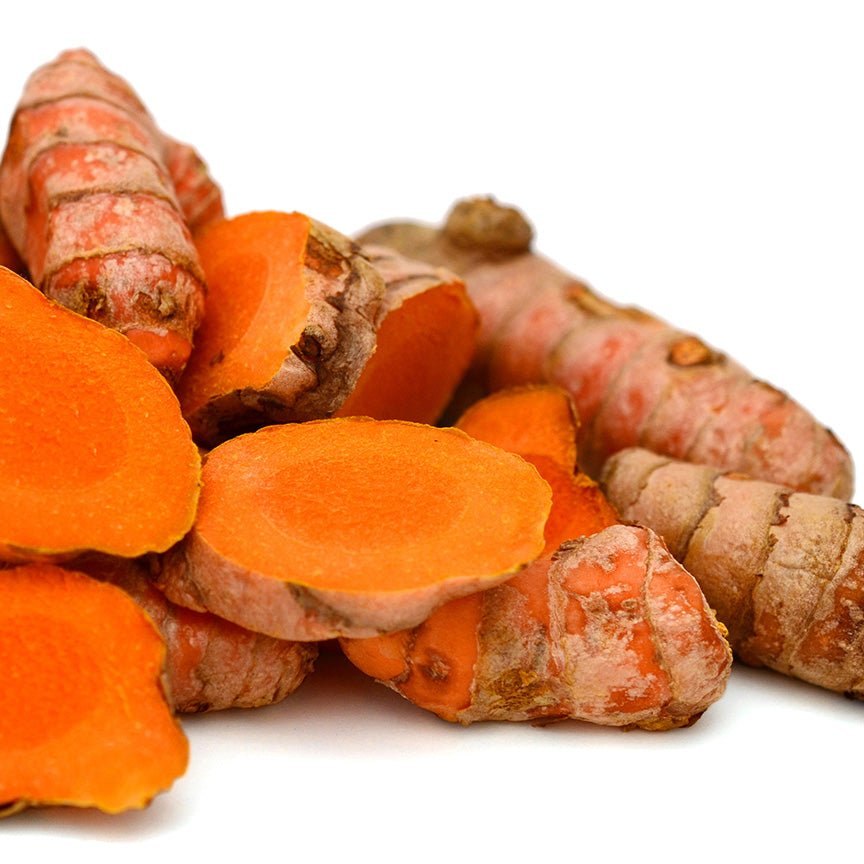
Earthy, slightly pungent, with a woody note and a faint touch of orange at the end. Less zesty than ginger and much earthier.
Fresh and ground turmeric are two different smells. Ground turmeric has been dried and milled, so it has lost the fresh pungency and kept only the earth and wood. That is why dishes made with fresh turmeric smell completely different from those made with the powder.
Of the trio ginger, turmeric and galangal, turmeric is the darkest and the least volatile root.
How to smell it
Cut thin slices of ginger, turmeric and galangal, lay them side by side and smell them in turn. This trio is the standard exercise of the spicy family, and turmeric is always the hardest of the three.
Why this one is hard
Because the strong yellow colour is distracting, and because turmeric powder is more familiar than the fresh root.
Don’t confuse with
This entry
Fresh turmeric
Spicy family
The same ginger family. Turmeric has turmerone, giving an earthy, slightly bitter note; ginger has zingiberene, giving a bright pungency. Turmeric is heavier, ginger faster.
Scientific note
Fresh turmeric contains turmerone, a sesquiterpene ketone that decides its smell. The yellow pigment, curcumin, does not evaporate at all and so has no smell. Old turmeric powder loses its smell but stays yellow — the same kind of separation between smell and another property as in black pepper.
In Vietnamese life
Turmeric appears in central Vietnamese cooking more than in the other two regions, especially in bún bò and fish dishes. It is also the most common folk remedy in Vietnam after ginger.