Reference point
Crush a young guava leaf thoroughly in the palm of your hand.
Do this before you read on. An entry only works when you have just smelled the thing.
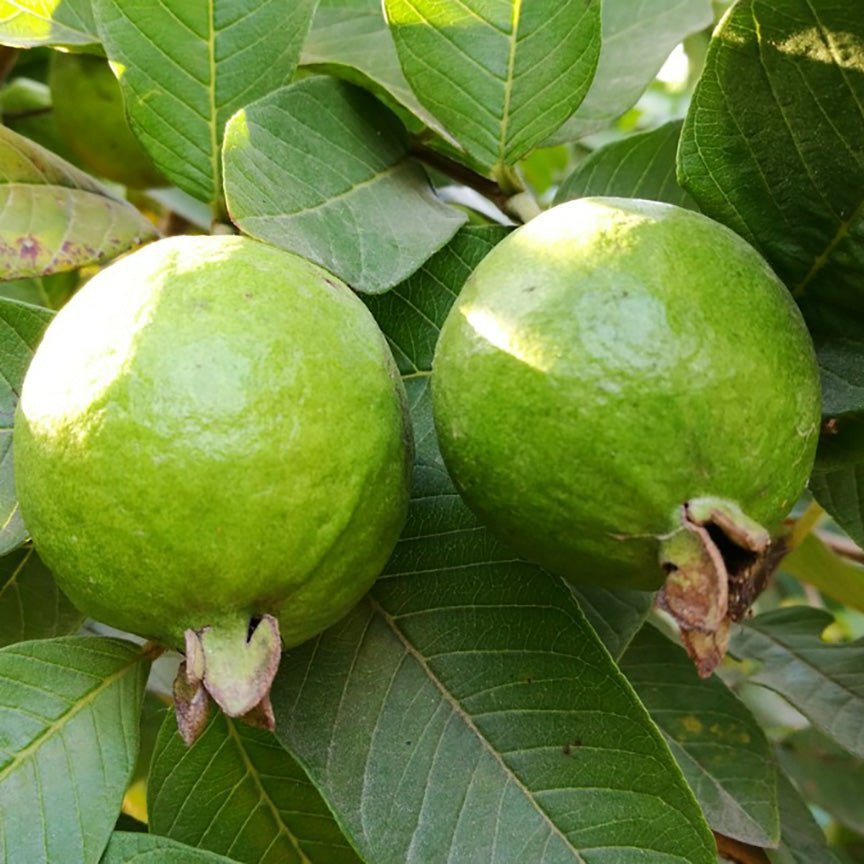
Green, astringent, with a clear dry, puckering note and a faint touch of wood. Not sweet like pomelo leaf, not sharp like lime leaf.
The astringency is the interesting part: it suggests a dry feeling in the mouth even though you are only smelling. Very few leaves can do that.
It also evaporates quickly. Within thirty seconds most of it has gone.
How to smell it
Pick young leaves at the tip of a branch and crush them thoroughly. Smell at once. Then try an old leaf lower down — the old leaf has much less smell, which is a lesson in where the plant concentrates its defensive compounds.
Why this one is hard
Because the astringency is easily mistaken for a taste rather than a smell. Astringency is a sensation on the tongue caused by tannins, but in guava leaf it appears even when you only smell — two different mechanisms giving the same impression.
Don’t confuse with
This entry
Guava leaf
Green family
Guava leaf is astringent and suggests a dry mouth; pomelo leaf is soft and floral. Smelled in turn, guava dries the tongue and pomelo does not.
Scientific note
Guava leaf is rich in tannins and sesquiterpenes, with a small amount of caryophyllene. The astringent feeling when smelling may come from stimulation of the trigeminal nerve rather than from smell alone — the same system that menthol and capsaicin act on, but in a different direction.
In Vietnamese life
Young guava leaves are eaten with raw fish salad and boiled pork in many regions, and guava-leaf water is a familiar folk remedy. The guava tree in the garden is so common an image that it appears in folk verse as a marker of the countryside.