Reference point
Bruise a fresh stalk of lemongrass and smell right at the bruise.
Do this before you read on. An entry only works when you have just smelled the thing.
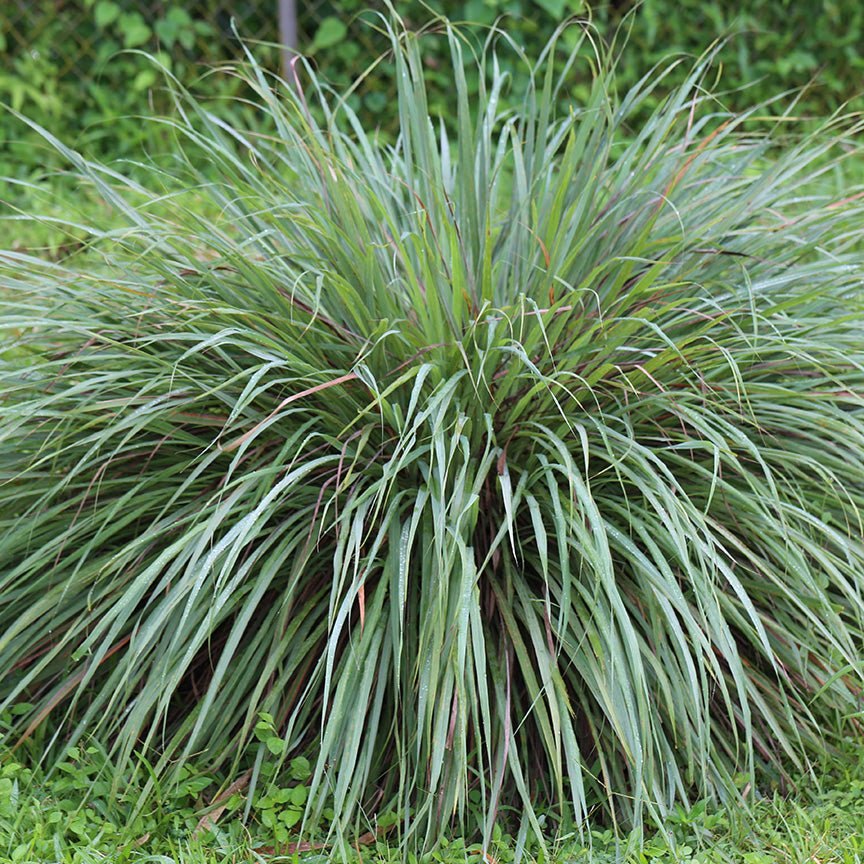
Citrus, but with body. It does not vanish in half a minute like peel; it stays for a few minutes, long enough to smell it three times and take notes.
Running all the way through is a green, slightly soapy thread — the thread that pulls lemongrass towards the green family and keeps it from belonging fully anywhere. It is a good example of scent families being sorting tools made by people, not real borders in nature.
Bruised lemongrass differs from sliced lemongrass, and both differ from a whole stalk. The more cells you break, the more oil escapes, but the faster it runs out. A bruised stalk gives a strong smell for ten minutes and then it is gone; the same stalk thinly sliced gives a lighter smell that lasts all afternoon.
How to smell it
Take a fresh stalk, cut off the leaves and keep the white base. Lay it on a chopping board and give it one firm blow with the back of a knife so the stalk cracks open. Smell right at the crack, not from a distance. Wait five minutes and smell again: the citrus part has weakened but the green thread is still there — that is the lasting part of lemongrass.
Why this one is hard
Beginners put lemongrass in the citrus family because they hear lemon, or in the green family because they hear green. Both are half right. Accepting that a smell can stand between two families is a step towards maturity in how you classify.
Don’t confuse with
This entry
Bruised lemongrass
Citrus family
Lemongrass has body — a green, slightly pungent layer under the lemon. Lime peel is thin and clear, with nothing underneath.
Scientific note
The citral in lemongrass is actually a mixture of two geometric isomers: geranial and neral. They differ only in the direction of one double bond, and the human nose can tell them apart — geranial is sharper, neral sweeter. An analysis that separates the two says more than one that lumps them into a single citral line.
Citral boils at around 229 degrees, so it is not light. Yet lemongrass arrives in the very first second, because citral’s detection threshold is very low and its concentration in the stalk is very high. Boiling point decides the order in which compounds leave a surface; detection threshold decides which one you notice first. The two do not always give the same answer.
In Vietnamese life
The citral in lemongrass has long been a raw material for the soap and fragrance industries, and that demand is the main reason lemongrass is grown on an industrial scale. The soapy note many people smell in fresh lemongrass is a backwards association: soap borrowed the smell of lemongrass, not the other way round.