Reference point
Crush a fresh peppermint leaf and smell it at once.
Do this before you read on. An entry only works when you have just smelled the thing.
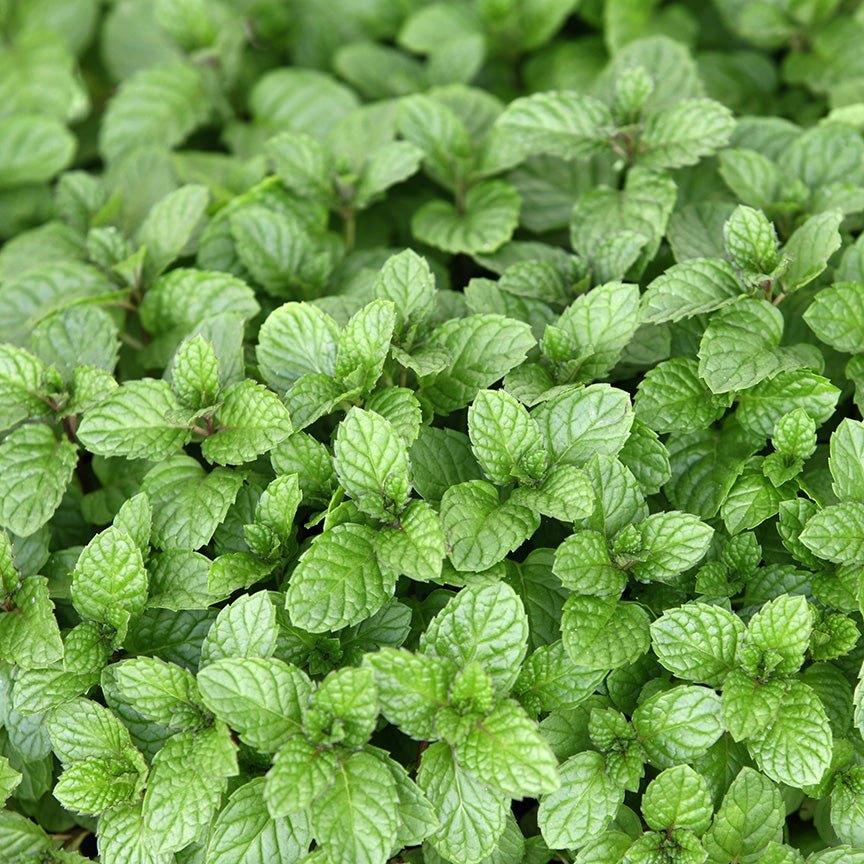
Icy and clean, much sharper than garden mint. It goes straight up the nose and throws the nasal passages wide open.
Menthol is responsible, and it works by binding to the very receptor the body uses to detect cold. So the cold here is real to the brain even though it is not real to a thermometer.
Compared with the medicated balm dầu gió, fresh peppermint is clearer and greener, without the camphor note. It is the purest form of the cold part of the medicinal family.
How to smell it
Crush a fresh peppermint leaf and smell it. Then breathe in through your mouth — you will feel the cold spread in your throat too, proof that this is not purely a matter of smell. Smell garden mint as well to see the difference: peppermint gives an icy cold, garden mint only coolness. That is the difference between having menthol and having almost none.
Why this one is hard
It is not hard, which makes it a good entry to start the medicinal family with before moving on to camphor and traditional herbal medicine.
Don’t confuse with
This entry
Peppermint
Medicinal family
The same mint genus but different chemical directions. Peppermint contains menthol, so it gives an icy cold; garden mint has almost no menthol, so it is cool without being cold. Tell them apart by the sensation of temperature, not by the name of a molecule — the dominant compound of garden mint depends on the variety.
Scientific note
Menthol binds to the TRPM8 receptor, the very receptor the body uses to detect low temperatures.
That explains something that looks like a contradiction on the volatility band. Peppermint is placed in the top stage, yet menthol boils at 212 degrees — it ought to come later. The reason is that most of menthol’s effect does not go through smell but through the trigeminal nerve, and that channel signals instantly rather than waiting for enough molecules to build up in the air. The brain receives a cold signal while the thermometer does not move. It is the mirror image of capsaicin in chilli, which binds to the heat receptor TRPV1 — two molecules fooling the same system in opposite directions.
In Vietnamese life
Peppermint was grown in Vietnam to extract menthol from the mid-twentieth century and was for a time a significant export. Today most commercial menthol is synthetic, and the peppermint plant has largely gone back to being a kitchen herb.