Reference point
Black peppercorns freshly crushed in a mortar.
Do this before you read on. An entry only works when you have just smelled the thing.
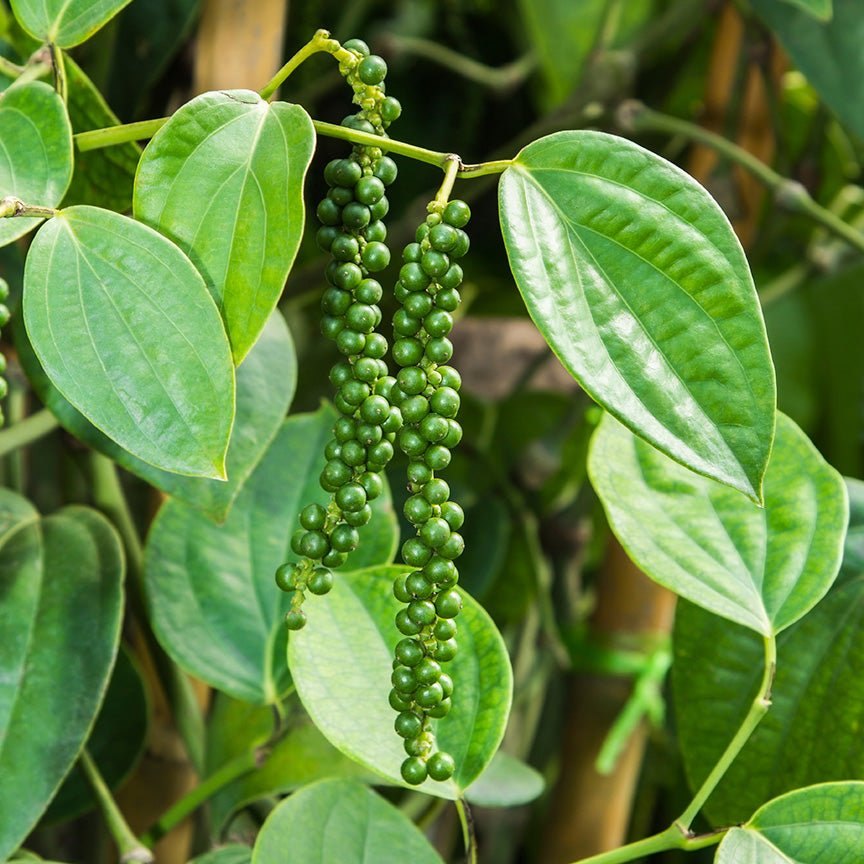
Dry, woody, with a zesty beat at the very start before it turns warm.
What stands out is the order: the smell comes first, the pungency in the nose a few seconds later. If you crush pepper and sniff hard straight away, you will miss the smell and get only the burn.
Pepper kept too long loses the zesty part entirely and keeps only the wood. You can tell by smell how long a jar of pepper has been open — a practical test anyone who cooks can use.
How to smell it
Crush a spoonful of black peppercorns in a mortar, wait three seconds and smell from a hand’s span away. Don’t lean in and don’t sniff hard. Compare with ready-ground pepper that has sat in a jar — the gap between the two is everything volatile that has been lost.
Why this one is hard
Because of the sneeze reflex. The body reacts before the nose can do its work, so smell from a distance and smell gently.
Don’t confuse with
This entry
Black pepper
Spicy family
Black pepper has a dry woody note and sabinene; amomum has camphor, so it is cooler, closer to the medicinal family. Smell carefully and you will find amomum cool and pepper not.
Scientific note
The pungency of black pepper comes from piperine, while its smell comes from terpenes such as sabinene and beta-caryophyllene. The two are entirely separate: piperine does not evaporate and so has no smell, and the terpenes do not stimulate the heat receptors and so are not pungent. Ground pepper kept long loses its smell but stays pungent, which is direct proof of that separation.
A note on reading the volatility band for this entry. Beta-caryophyllene is marked as leading because it makes up the largest share and is the signature compound of pepper, but it boils at around 264 degrees, so it is not what you smell first. The brightness in the first second comes from light monoterpenes such as sabinene and limonene. The most abundant compound and the first to arrive are two different questions.
In Vietnamese life
Vietnam has been the world’s largest pepper exporter for many years, but almost all of it leaves as a raw commodity. Pepper oil, a much higher-value product, is still mostly extracted in other countries.