Reference point
A cluster of yellow ylang-ylang flowers, left in a closed room for half an hour, then smelled.
Do this before you read on. An entry only works when you have just smelled the thing.
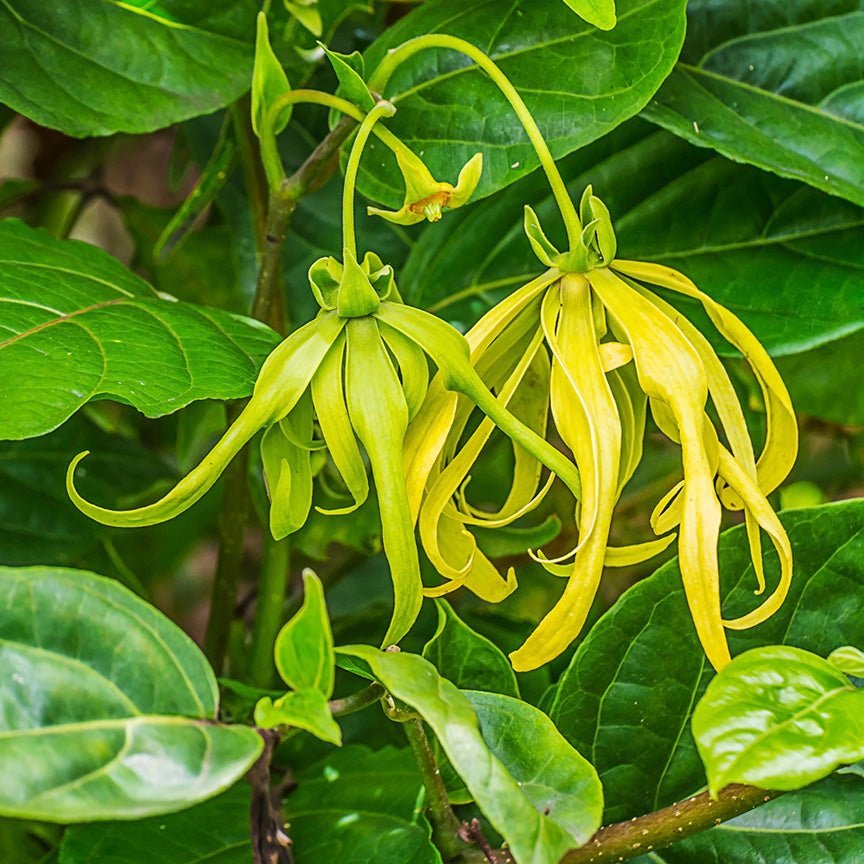
Very dense, with a note of ripe banana and a creamy, fatty layer underneath. It is much heavier than white champaca and stays far longer. Only two floral entries sit in the base stage, and both — ylang-ylang and night-blooming jasmine — are strongest at night.
Ylang-ylang and white champaca are the most dangerous pair to confuse in the floral family, because the two trees have similar Vietnamese names and flowers of a similar yellow. But champaca is clearer and cleaner, while ylang-ylang is fatty and almost has a taste.
The ripe-banana note comes from esters, the same group that builds the smell of ripe fruit. It is a surprise: a flower borrowing the language of fruit.
How to smell it
Put a few ylang-ylang flowers in a small room with the door shut, wait thirty minutes, then go in and smell. This scent needs a closed space and time to build up. Smelling a single flower outdoors misses most of it.
Why this one is hard
Because of the names. Hoàng lan, ngọc lan tây and ylang-ylang are three names for the same tree, while ngọc lan is a different tree altogether. The tangle of names causes more confusion than the smell itself.
Don’t confuse with
This entry
Ylang-ylang
Floral family
Two quite different trees despite their similar names. White champaca is clean and clear; ylang-ylang is fatty, with a ripe-banana note, and lasts much longer.
Scientific note
Ylang-ylang contains large amounts of aromatic esters together with sesquiterpenes, and the ratio between the two shifts over the course of distillation. That is why the industry divides the product into fractions: the first distillate is the lightest and most floral, later ones grow heavier and woodier. One batch of flowers yields several oils that differ in price and in smell.
In Vietnamese life
Ylang-ylang is a key ingredient of Chanel No. 5 and hundreds of other twentieth-century formulas. The tree grows commonly in Vietnam but is barely exploited commercially — most of the world’s ylang-ylang comes from Madagascar and the Comoros.