Reference point
Scrape a fresh drop of resin oozing from a Canarium trunk and smell it on the knife tip.
Do this before you read on. An entry only works when you have just smelled the thing.
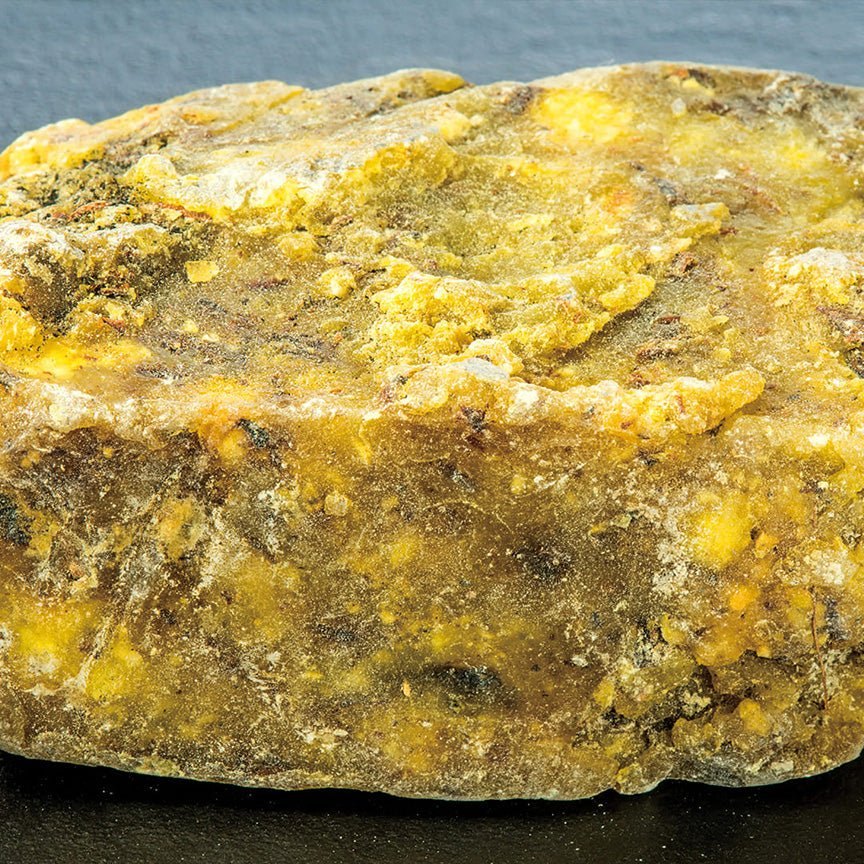
Piney and clean at the start, slightly zesty, then turning dry and dusty. This three-beat structure plays out in about a minute.
Sweeter than pine wood, with less of a solvent note. Setting the two side by side is the quickest way to understand why resin and wood, though from the same tree, are treated as two different things in perfumery.
It is the reference for understanding resins in general, before moving on to frankincense or myrrh.
How to smell it
Find a Canarium tree still oozing resin and take a fresh drop on a wooden stick. Smell it while it is still sticky. If there is no tree, dried Canarium resin sold at traditional medicine shops will do, though it has lost the zesty top.
Why this one is hard
Dry and fresh resin differ considerably. Most people only meet the dry resin, which has lost its fastest-evaporating layer and so seems simpler than it is.
Don’t confuse with
This entry
Canarium resin
Woody & Resinous family
Canarium resin is sweet and zesty at the start; pine wood is dry, sharp and leans towards solvent.
Scientific note
Canarium resin flows when the bark is cut, and it is the normal resin of a healthy tree — quite unlike agarwood, which forms only when the Aquilaria tree is wounded and infected by fungi. One is a substance the tree secretes routinely; the other is a pathological response.
The volatile part of Canarium resin is mainly monoterpenes, with alpha-pinene dominant — the same leading compound as pine resin. That is why the two sound close in the first beat. The non-volatile part is triterpenoid acids, and they are what make the resin harden over time.
The three-beat structure you smell reflects exactly that composition: light monoterpenes first, sesquiterpenes in the middle, then the heavy resin left on your hand.
In Vietnamese life
Canarium resin was once used to caulk boats and make torches in many coastal areas of central Vietnam. The tree’s name, trám, is the same word as “to caulk”, and for many people the smell of the resin is the smell of a boatyard rather than of the forest.