Reference point
Squeeze a piece of dark-green, knobbly king orange peel.
Do this before you read on. An entry only works when you have just smelled the thing.
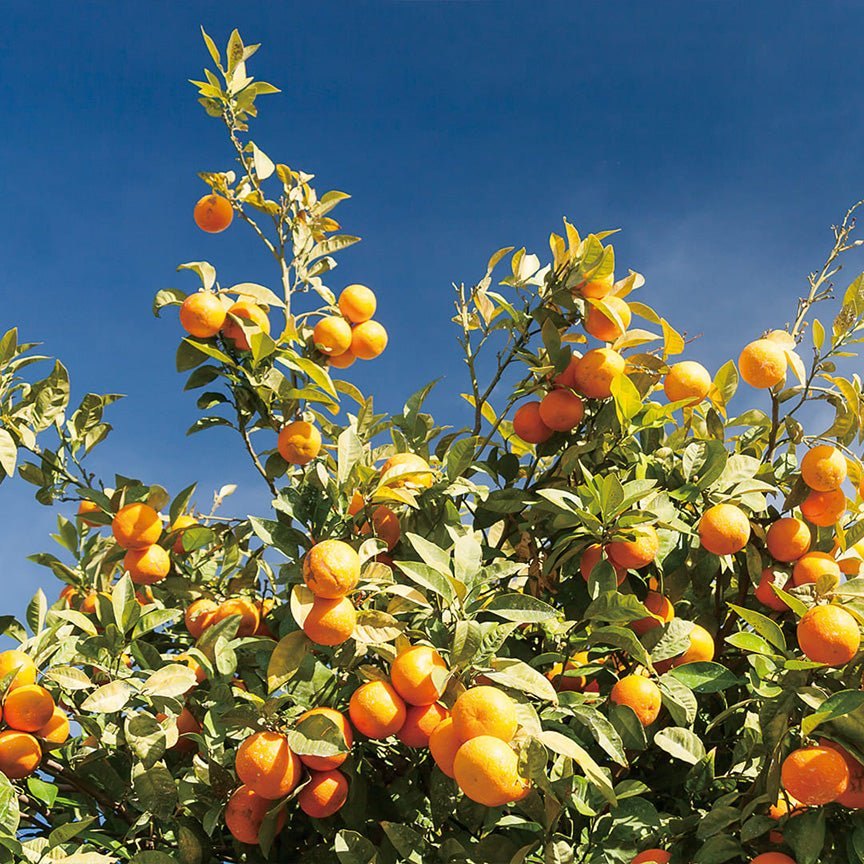
Brighter and sweeter than lime peel, but coarser than tangerine peel. It has a clear green bitterness that thin-skinned imported oranges lack.
The thick, knobbly peel of the king orange holds more oil pockets, so it gives more smell for the same area. That is why people choose it, rather than yellow oranges, for candied peel and for scented bath water.
Green and ripe yellow fruit differ noticeably: the green fruit is harsher and more bitter, the ripe fruit rounder and sweeter. In Vietnam king oranges are usually picked while the peel is still green, even though the flesh is ripe.
How to smell it
Squeeze a piece of king orange peel two hand-spans from your nose so the oil sprays out. Straight afterwards do the same with tangerine peel. The king orange will show a green bitterness the tangerine does not have.
Why this one is hard
Because people are used to comparing oranges with thin-skinned imported ones, which smell completely different and much lighter.
Scientific note
The ratio between limonene and aldehydes such as decanal decides whether orange peel is sweet or sharp. The aldehydes make up less than one percent but have detection thresholds many orders of magnitude lower than limonene, so their effect is far larger than their share. It is a textbook example of how the percentages on an analysis are not proportional to perception.
In Vietnamese life
The king orange (cam sành) is a native variety grown across the Mekong Delta and the northern midlands. Its thick, unattractive peel makes it hard to export, but that very peel is the most fragrant part of the fruit.