Essential oils · Woody & Resinous family
Sandalwood essential oil
Santalum album
Đàn hương · Santalaceae
Soft, sweet, milky wood. So quiet in the opening that many people think the bottle is weak.
It is quiet because the santalols evaporate very slowly. You have to wait a few minutes on skin or paper for the smell to open, and after that it stays for days, almost unchanged. Few oils are both so discreet and so lasting.
The oil lies in the heartwood, and the tree needs several decades before it has heartwood worth distilling. That is why Indian sandalwood is expensive and so often replaced with other species or synthetics. The botanical name on the label and the lot analysis are the two things to look at before the price.
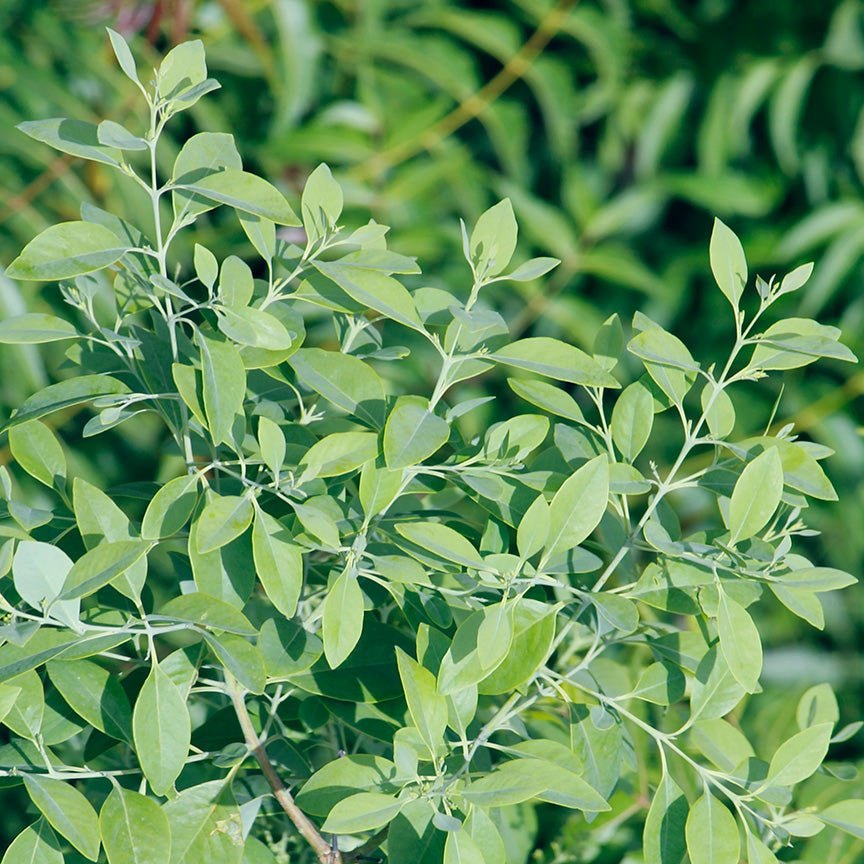
- Plant part
- Wood
- Method
- Water distillation
- Vietnamese name
- Đàn hương
- Scent family
- Woody & Resinous
- Plant family
- Santalaceae
- Lots published
- —
 Wood
Composition profile
The composition in the article, read as structure: 2 compounds, each with its chemical class and note. The article gives only a standard’s permitted ranges, not measurements.
| Compound | Level | Class | Note |
|---|---|---|---|
| α-Santalol EU | 41–54 % | Alcohols | Base |
| β-Santalol | 16–24 % | — | — |
No group totals: these are a standard’s permitted ranges, and adding ranges does not give the composition of any real sample.
Put it beside another oil in the Compare tool Which other oils are rich in α-Santalol?
The standard: two santalols
East Indian sandalwood oil (Santalum album) has an international standard, ISO 3518:2002. Its most important part is two figures, as quoted in a 2021 study in Molecules:
| Compound | Requirement in ISO 3518:2002 |
|---|---|
| α-Santalol | 41–54% |
| β-Santalol | 16–24% |
Both are sesquiterpene alcohols that evaporate very slowly, and they make up the characteristic soft, milky wood smell. The rest of the bottle is many smaller compounds of the same group.
Six bottles of “sandalwood”, one right
The 2021 study bought six oils sold as sandalwood and analysed them by GC/MS. The results:
- None met the requirements of ISO 3518, especially for α-santalol.
- Three were dominated by valerianol, elemol, eudesmol isomers and caryophyllene. That is the fingerprint of amyris oil (Amyris balsamifera), a Caribbean tree sometimes called “West Indian sandalwood” although it is not in the same family as true sandalwood.
- Two were synthetic mixtures: one mostly benzyl benzoate, the other containing synthetic woody aroma chemicals such as javanol, polysantol and ebanol.
- The label was correct in only three cases: one bottle that really was Santalum album and two clearly labelled as amyris.
The two synthetic bottles were still labelled “100% natural essential oil from sandalwood”. The article on the “100% pure” claim explains why that phrase proves nothing.
Why sandalwood is so often faked
The oil sits in the heartwood, and a tree needs many years to build enough heartwood to distil. Over-harvesting in India sharply reduced the supply of wild Santalum album, and the price rose with it. When a material is both expensive and hard to check, replacing it with a cheaper species or a synthetic is commercially predictable.
Other Santalum species are also grown and distilled legitimately, such as Australian sandalwood (S. spicatum). They are not fakes, but their composition differs from S. album, and the label should name the species correctly.
Three questions for the seller
- What is the species, and where does the wood come from?
- How much α-santalol and β-santalol does the lot analysis show?
- Are valerianol, elemol or benzyl benzoate present at high levels? If so, it is not intact S. album oil.
Sources
- Kucharska M. et al. (2021). A Comparison of the Composition of Selected Commercial Sandalwood Oils with the International Standard. Molecules 26(8), 2249. doi:10.3390/molecules26082249
- ISO 3518:2002. Oil of sandalwood (Santalum album L.).
In the car
The main compounds of this oil boil above 250 °C, so it is among the oils that hold up when a car is parked in the sun. Which essential oils can take a hot car explains why. We are measuring a hanging scented wood for the car, vacuum-infused with essential oil.
Buy Sandalwood
Sandalwood oil: no lot has been brought in yet, so it is not on sale. Message us if you need it.
In the scent dictionary: Sandalwood — a description of the smell, the compounds behind it, and how to smell it for yourself.
Further reading
- Which essential oils can take a 60 °C car
- What perfume note names mean: jasmine, tuberose, amber and thirty more
- The road of attar: how distillation travelled from Persia to Europe
- Part II. Structure–odour relationships in terpenoids · research
- Appendix A2. Facts on international essential oils and ISO standards · research
Close to Sandalwood
Also from the wood Atlas cedarwood · Blue cypress · Camphor ct camphor · Ho wood · Palo santo · Rosewood
Same method: water distillation Agarwood
Quick answers
What does sandalwood essential oil smell like?
Soft, sweet, milky wood. So quiet in the opening that many people think the bottle is weak.
What is the botanical name of sandalwood oil?
The plant is Santalum album, in the Santalaceae family. In Vietnamese it is called đàn hương.
How is sandalwood oil produced?
From the wood of the plant, by water distillation. See the method for what that does to the oil.
What are the main compounds of sandalwood oil?
From the composition data on this page, the oil is led by α-Santalol. Proportions vary with origin, harvest and method; a lot analysis is the only answer for a given bottle.
Last updated