Essential oils · Medicinal family
Wintergreen essential oil
Gaultheria fragrantissima
Wintergreen · Ericaceae
Sweet, cooling, medicinal, and so familiar that almost everyone names something else when they smell it: heat rub, pain patches, massage cream.
There is a reason for that familiarity. Almost the whole bottle is a single compound, methyl salicylate, and that is the very compound in all those products. Few essential oils smell of exactly one molecule like this.
That is also why it is the oil most easily replaced with synthetic methyl salicylate. The methyl salicylate figure on an analysis says nothing about origin, because natural oil and synthetic material are both about 99.5%. A few trace compounds can give synthetic material away, but not every synthesis route leaves a trace; to be sure, isotope analysis is also needed.
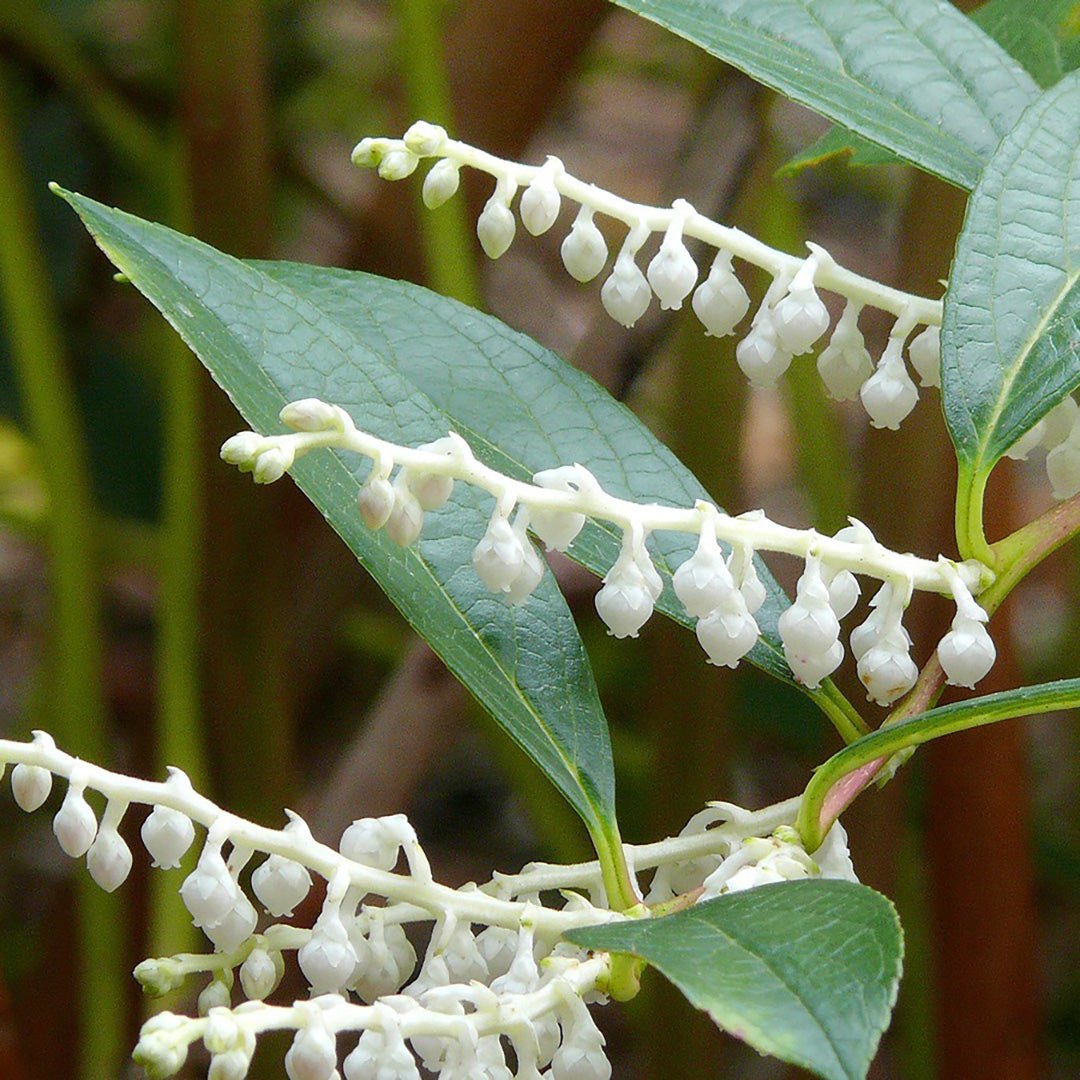
- Plant part
- Leaves
- Vietnamese name
- Wintergreen
- Scent family
- Medicinal
- Plant family
- Ericaceae
- Lots published
- —
 Leaves
Composition profile
The published composition from the article, read as structure: 1 compounds adding up to about 100 % of the sample. Figures are printed as the source gives them — one sample, not a species average.
| Compound | Level | Class | Note |
|---|---|---|---|
| Methyl salicylate EU | 99.69–99.89 % | Esters | Middle |
By chemical class
- Esters99.9 %
By note
- Middle99.9 %
Group totals use the upper bound of each range and only the compounds the article lists; bars are relative to the identified total.
Put it beside another oil in the Compare tool Which other oils are rich in Methyl salicylate?
One oil, almost one molecule
The wintergreen oil on this page is distilled from the leaves of Gaultheria fragrantissima, a Himalayan shrub. A 2022 study in Plants analysed laboratory-distilled oil, commercial oils and synthetic methyl salicylate:
| Sample | Methyl salicylate |
|---|---|
| Leaf oil distilled from 4 areas in Nepal | 99.69–99.89% |
| Commercial oils, Nepal (7 samples) | 99.54–99.86% |
| Commercial oils, China (7 samples) | 99.42–99.91% |
| Synthetic methyl salicylate (3 samples) | 98.82–99.65% |
The rest is only traces: ethyl salicylate up to 0.32%, linalool 0.01–0.10%.
Natural or synthetic: why it is hard to tell
Because both natural oil and synthetic material are about 99.5% methyl salicylate, the main figure on an analysis says nothing about origin. The 2022 study looked for clues in the trace compounds:
- Dimethyl 2-hydroxyterephthalate is a by-product of making methyl salicylate from salicylic acid and is absent from natural oil. When 20–30% synthetic material was mixed into natural oil, it rose from 0.07% to 0.12%.
- Natural trace compounds fall when the oil is diluted with synthetic material; linalool, for example, dropped from 0.05% to 0.02% at a 50% addition.
- But methyl salicylate made from aspirin leaves no such marker, which the authors call “a loophole”.
The study concludes that GC-MS alone is insufficient, and recommends adding chiral GC-MS and ¹⁴C isotope analysis (carbon from petroleum no longer contains ¹⁴C; carbon from plants does).
Safety: a dangerous oil to swallow
Methyl salicylate is a salicylate, in the same family as aspirin. The MSD Manual calls oil of wintergreen the most concentrated and toxic form of salicylate: swallowing less than 5 ml is equivalent to about 7,000 mg of aspirin and can kill a young child. Any ingestion should be treated as serious and needs emergency care at once.
On skin, regulators also set low levels:
- The EU SCCS scientific advice of 2023 on children aged 6 months to 6 years: toothpaste is safe up to 2.52%; for children aged 6 months to 3 years, up to 0.02% in shower gel, hand soap, shampoo, body lotion and lip products.
- The UK cosmetics regulations of 2025 restrict methyl salicylate, for example to 0.6% in hydroalcoholic fragrances and 0.06% in leave-on skin products for people over 1 year old.
For an oil that is 99% methyl salicylate, 0.06% of the compound corresponds to about 0.06% oil, less than one drop in 50 ml. Keep the oil out of reach of children, do not use it for young children or during pregnancy (see children and pregnancy), and do not use it if you take anticoagulants or are allergic to aspirin without asking a doctor.
Sources
- Ojha P.K., Poudel D.K., Dangol S. et al. (2022). Volatile Constituent Analysis of Wintergreen Essential Oil and Comparison with Synthetic Methyl Salicylate for Authentication. Plants 11(8), 1090. doi:10.3390/plants11081090
- O’Malley G.F., O’Malley R. Aspirin and Other Salicylate Poisoning. MSD Manual Professional Version (reviewed 2025).
- SCCS (2023). Scientific advice on children exposure to methyl salicylate (methyl 2-hydroxybenzoate). SCCS/1654/23.
- The Cosmetic Products (Restriction of Chemical Substances) Regulations 2025. UK SI 2025/413.
Buy Wintergreen
Wintergreen oil: no lot has been brought in yet, so it is not on sale. Message us if you need it.
Where you may already have smelled it
According to the analyses cited above, this oil contains up to 99.9 % methyl salicylate. It is also part of, though not the lead in, the scenes below from the scent dictionary. Smelling one of those scenes again is a way to get to know it without opening a bottle. A shared compound does not mean the oil smells exactly like the scene.
Further reading
Close to Wintergreen
Also from the leaves Bay laurel · Eucalyptus dives · Eucalyptus radiata · Lemon eucalyptus · Lemon myrtle · Pinyon pine · Utah juniper · White fir
Same method: direct steam distillation Angelica root · Balsam fir · Bee balm · Clary sage · Clove bud · Fragonia · Indian bay leaf · Tagetes
Quick answers
What does wintergreen essential oil smell like?
Sweet, cooling, medicinal, and so familiar that almost everyone names something else when they smell it: heat rub, pain patches, massage cream.
What is the botanical name of wintergreen oil?
The plant is Gaultheria fragrantissima, in the Ericaceae family. In Vietnamese it is called wintergreen.
How is wintergreen oil produced?
From the leaves of the plant, by direct steam distillation. See the method for what that does to the oil.
What are the main compounds of wintergreen oil?
From the composition data on this page, the oil is led by Methyl salicylate. Proportions vary with origin, harvest and method; a lot analysis is the only answer for a given bottle.
Is there anything to watch out for with wintergreen oil?
Up to 98 % methyl salicylate — one of the most dangerous essential oils when misused. Toxic if swallowed, even in small amounts. Not for use with children. Not for people taking anticoagulants or allergic to salicylates.
Last updated