Tagetes essential oil
Tagetes minuta
Hoa cúc vạn thọ · Asteraceae
Green and fruity, a little like green apple, with a strong pungent edge. Straight from the bottle it is harsh; diluted, the fruit comes through.
The oil is distilled from Tagetes minuta, a wild marigold native to South America, not the marigolds grown for Tet decorations. Its main compounds are dihydrotagetone, tagetone, ocimenone and β-ocimene, in proportions that depend on leaf or flower.
Tagetes oil can cause photosensitivity because of α-terthienyl. IFRA and the EU limit it to 0.01% in leave-on products, and the EU bans it in sunscreens. Do not apply it to skin that will be exposed to the sun.
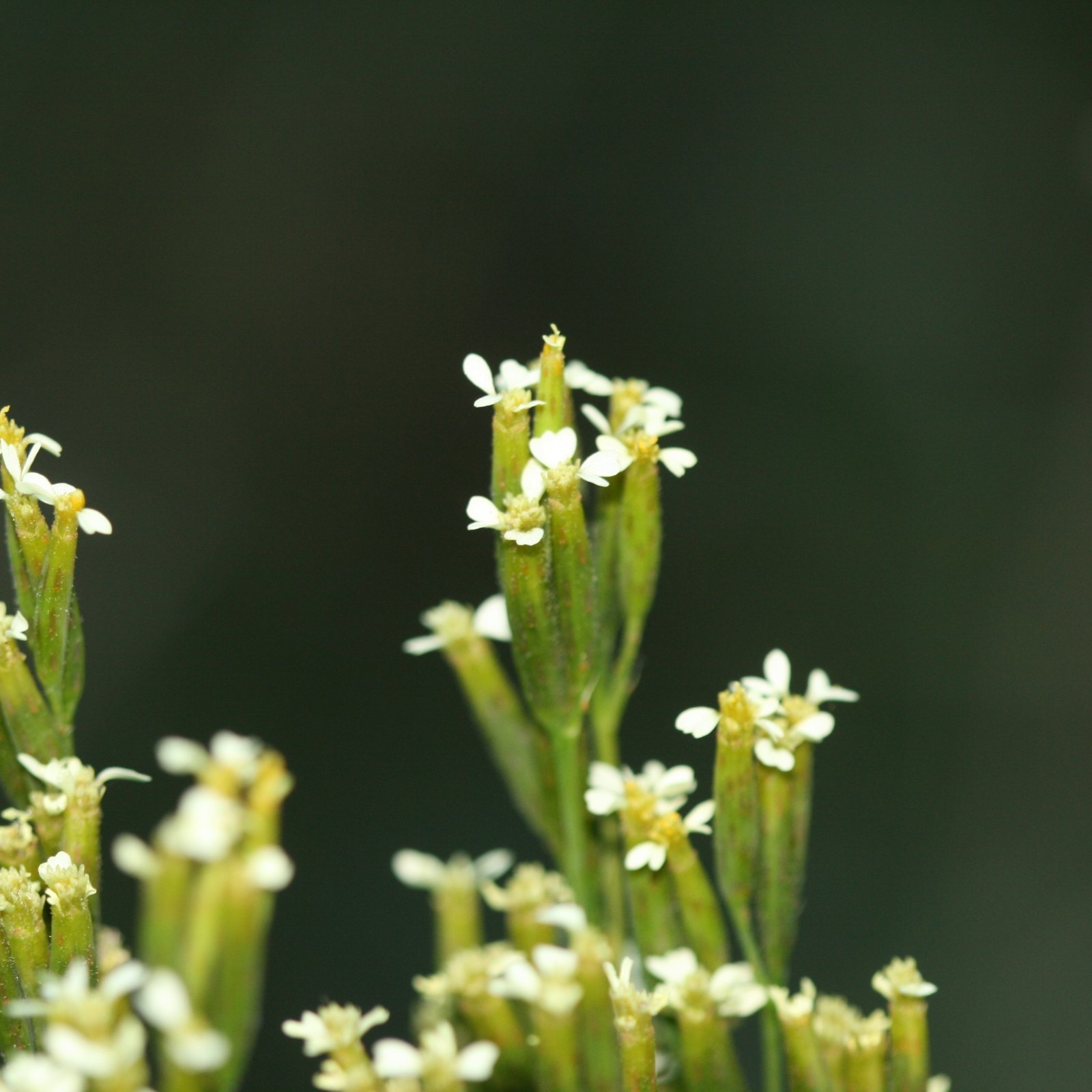
- Plant part
- Flowers
- Vietnamese name
- Hoa cúc vạn thọ
- Scent family
- Green
- Plant family
- Asteraceae
- Lots published
- —
 Flowers
Composition profile
The published composition from the article, read as structure: 5 compounds adding up to about 96 % of the sample. Figures are printed as the source gives them — one sample, not a species average.
| Compound | Level | Class | Note |
|---|---|---|---|
| Dihydrotagetone | 42.9 % | — | — |
| Tagetone | 16.8 % | — | — |
| Limonene EU | 13.1 % | Monoterpenes | Top |
| Ocimenone | 11.7 % | — | — |
| cis-β-Ocimene | 11.5 % | Monoterpenes | Top |
By chemical class
- Unclassified71.4 %
- Monoterpenes24.6 %
By note
- Top24.6 %
- Unclassified71.4 %
Group totals use the upper bound of each range and only the compounds the article lists; bars are relative to the identified total.
What tagetes is
Tagetes oil is distilled from Tagetes minuta, a wild marigold native from Brazil to southern South America (Argentina, Bolivia, Chile, Paraguay, Uruguay) and now naturalised on many continents. It is not the ornamental marigold grown for the Vietnamese New Year. The oil is distilled from the aerial parts of the plant, leaves and flowers.
Composition: it changes with plant part and season
A 2008 study of wild plants in Chaco (Argentina) analysed leaves and flowers separately at different stages. Mean values:
| Compound | Leaves, before flowering | Leaves, flowering | Flowers (May) |
|---|---|---|---|
| Dihydrotagetone | 42.9% | 30.3% | 7.5% |
| Tagetone | 16.8% | 16.6% | 7.8% |
| Ocimenone | 11.7% | 16.0% | 32.9% |
| β-Ocimene | 11.5% | 17.5% | 39.6% |
| Limonene | 13.1% | 10.3% | 6.4% |
Variation between samples is very large; for example, dihydrotagetone in flowering leaves is 30.3 ± 16.9%. Ocimenone is also called tagetenone.
In Iran, a 2006 study compared two areas near Tehran: dihydrotagetone 21.4% and 13.7%, (Z)-tagetone 13.1% and 8.4%, (E)-ocimenone 11.8% and 13.3%, (Z)-β-ocimene 8.3% and 17.7%; α-terpineol was also a main compound, at 15.6% and 20.8%. Oil yields were 1.44% and 0.8%.
Reading the table
Leaves give an oil rich in dihydrotagetone and tagetone; flowers give an oil rich in β-ocimene and ocimenone. So the proportion of leaf and flower in the still, and the time of harvest, decide much of the composition. The literature does not describe fixed chemotypes; what is certain is that the oil changes with plant part, growth stage and origin.
Its smell
Dihydrotagetone and tagetone give the green, pungent, slightly fruity part; ocimenone and β-ocimene give a sweet fruity and floral side. Smelled straight it is harsh; diluted, the fruity note comes through.
Safety: phototoxicity
The phototoxic compound in tagetes is α-terthienyl. According to a 2015 opinion of the EU Scientific Committee on Consumer Safety (SCCS), α-terthienyl in the oils tested ranged from below the detection limit to 2.45%, and the absolutes were more phototoxic than the essential oils.
IFRA (standard “Tagetes oil and absolute”, Amendment 49, 2020):
- Tagetes erecta: prohibited.
- T. minuta and T. patula: restricted for phototoxicity. α-Terthienyl in the oil or absolute must not exceed 0.35%.
- Limits in finished products: 0.010% in most categories, including fine fragrance (category 4) and creams (category 5); 0.10% in some categories such as rinse-off products (category 9).
EU (Regulation (EU) 2018/978):
- T. erecta flower extract and oil: banned in cosmetics.
- T. minuta and T. patula: at most 0.01% in leave-on and 0.1% in rinse-off products; α-terthienyl no more than 0.35%; not allowed in sunscreens or products for use with UV exposure.
Do not apply to skin that will be exposed to the sun, and keep out of the reach of children. The phototoxicity page explains more.
Sources
- Chamorro E.R. et al. (2008). Anales de la Asociacion Quimica Argentina 96(1-2), 80–86.
- Farshbaf Moghaddam M. et al. (2006). Journal of Medicinal Plants 5(18), 49–55.
- Salehi B. et al. (2018). Review of the genus Tagetes. Molecules 23(11), 2847. doi:10.3390/molecules23112847
- IFRA Standard: Tagetes oil and absolute, Amendment 49 (2020).
- SCCS (2015, corrigendum 2017). Opinion on Tagetes extracts, SCCS/1551/15.
- Regulation (EU) 2018/978 amending Annexes II and III to Regulation (EC) No 1223/2009.
Buy Tagetes
Tagetes oil: no lot has been brought in yet, so it is not on sale. Message us if you need it.
Where you may already have smelled it
According to the analyses cited above, this oil contains up to 13.1 % limonene. It is also the leading compound in the scenes below from the scent dictionary. Smelling one of those scenes again is a way to get to know it without opening a bottle. A shared compound does not mean the oil smells exactly like the scene.
- Buddha’s handTake a ripe yellow Buddha’s hand and lightly scratch the peel with a fingernail
- Vietnamese lime peelSqueeze a Vietnamese lime and smell the peel, not the juice
- Crushed pomelo peelSqueeze a piece of Nam Roi pomelo peel hard, so the oil sprays out
- Ripe kumquat peelLightly squeeze the peel of a ripe yellow kumquat
Further reading
Close to Tagetes
Same plant family: Asteraceae Blue tansy · Helichrysum · Immortelle Madagascar · Mugwort · Roman chamomile · Tarragon
Also from the flowers Jasmine grandiflorum · Lotus · Osmanthus · Rose absolute · Rose otto · Spike lavender · St John’s wort · Tuberose
Same method: direct steam distillation Cupressus · Frankincense frereana · Honey myrtle · Japanese mint · Lavandin · Red myrtle · Rose otto · Sweet fennel
Quick answers
What does tagetes essential oil smell like?
Green and fruity, a little like green apple, with a strong pungent edge. Straight from the bottle it is harsh; diluted, the fruit comes through.
What is the botanical name of tagetes oil?
The plant is Tagetes minuta, in the Asteraceae family. In Vietnamese it is called hoa cúc vạn thọ.
How is tagetes oil produced?
From the flowers of the plant, by direct steam distillation. See the method for what that does to the oil.
What are the main compounds of tagetes oil?
From the composition data on this page, the oil is led by Limonene and cis-β-Ocimene. Proportions vary with origin, harvest and method; a lot analysis is the only answer for a given bottle.
Last updated