Essential oils · Floral family
Palmarosa essential oil
Cymbopogon martinii
Sả hoa hồng · Poaceae
Rose, but dry, with grass lying just beneath. The opening is sweet, then the grassy stalk shows through — something real rose never has.
That sweetness is geraniol, the very compound behind a large part of the smell of rose. So the nose says “rose” before it realises it is smelling a grass, and that moment of being out of step is the most interesting thing about this oil.
It lasts on a smelling strip longer than any other lemongrass relative. It is still there overnight, when lemongrass has faded since the afternoon before.
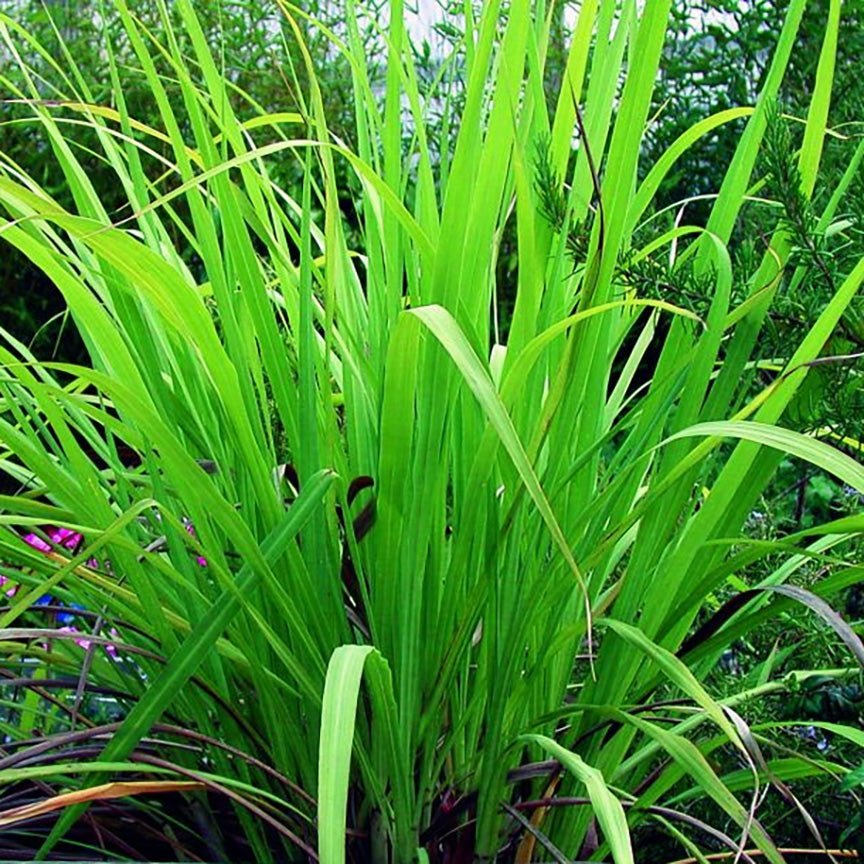
- Plant part
- Leaves
- Vietnamese name
- Sả hoa hồng
- Scent family
- Floral
- Plant family
- Poaceae
- Lots published
- —
 Leaves
Composition profile
The published composition from the article, read as structure: 1 compounds adding up to about 0 % of the sample. Figures are printed as the source gives them — one sample, not a species average.
| Compound | Level | Class | Note |
|---|---|---|---|
| Geraniol EU | — | Alcohols | Base |
By chemical class
By note
Group totals use the upper bound of each range and only the compounds the article lists; bars are relative to the identified total.
Put it beside another oil in the Compare tool Which other oils are rich in Geraniol?
One species, two oils
Palmarosa comes from Cymbopogon martinii, a grass native to India. The species has two varieties that give two quite different oils:
- C. martinii var. motia gives palmarosa oil, rich in geraniol, with a dry rose smell. This is the oil this page is about.
- C. martinii var. sofia gives gingergrass oil, sharper and grassier, with a different composition.
The two varieties look almost identical in the field. Buyers can only tell them apart by smell and by analysis, so a label that says “Cymbopogon martinii” without the variety does not give enough information.
Measure before you analyse
Before GC/MS, essential oils were checked with a few cheap, fast physical measurements. The ISO 4727 standard for palmarosa oil (1988 edition) sets these ranges:
| Property | Range in ISO 4727 (1988) |
|---|---|
| Relative density at 20 °C | 0.880–0.894 |
| Refractive index at 20 °C | 1.471–1.478 |
| Optical rotation | −1.4° to +3° |
| Acid value | 1.0 maximum |
| Solubility in 70% ethanol | fully miscible in 2 volumes |
Each figure answers a different question. A density or refractive index outside the range suggests the oil has been cut with something heavier or lighter, such as a vegetable oil or a solvent. A high acid value points to an old or poorly stored oil. An oil that does not dissolve fully in 70% alcohol often contains fatty oil, since fatty oils are almost insoluble in dilute alcohol.
These measurements do not replace GC/MS, but they weed out obviously bad lots at very low cost. ISO has since published ISO 4727:2021; the figures above come from the 1988 edition.
Geraniol and the rose connection
Geraniol is the main compound of palmarosa, and also one of the compounds that make up the smell of rose. That is why geraniol-rich oils such as palmarosa are always candidates for stretching expensive rose oil. The article on cutting with a cheaper oil of the same group explains how to spot this in an analysis.
Geraniol is also on the European list of skin allergens that must be declared on cosmetic labels above a set threshold. People with sensitive skin should test on a small area first, and always dilute before use.
Sources
- ISO 4727:1988. Oil of palmarosa (Cymbopogon martinii var. motia).
- ISO 4727:2021, the current edition of the same standard.
Buy Palmarosa
Palmarosa oil: no lot has been brought in yet, so it is not on sale. Message us if you need it.
Where you may already have smelled it
According to the text above, this oil is rich in geraniol. It is also the leading compound in the scenes below from the scent dictionary. Smelling one of those scenes again is a way to get to know it without opening a bottle. A shared compound does not mean the oil smells exactly like the scene.
Further reading
Close to Palmarosa
Same plant family: Poaceae East Indian lemongrass · Haitian vetiver · Java citronella · Vetiver
Also from the leaves Cypress · Douglas fir · Java citronella · Kaffir lime leaf · Lemon verbena · Ponderosa pine · Thuja · White spruce
Same method: direct steam distillation Copaiba · Douglas fir · Guava leaf · Hops · Java citronella · Sweet fennel · Thuja · Utah juniper
Quick answers
What does palmarosa essential oil smell like?
Rose, but dry, with grass lying just beneath. The opening is sweet, then the grassy stalk shows through — something real rose never has.
What is the botanical name of palmarosa oil?
The plant is Cymbopogon martinii, in the Poaceae family. In Vietnamese it is called sả hoa hồng.
How is palmarosa oil produced?
From the leaves of the plant, by direct steam distillation. See the method for what that does to the oil.
What are the main compounds of palmarosa oil?
From the composition data on this page, the oil is led by Geraniol. Proportions vary with origin, harvest and method; a lot analysis is the only answer for a given bottle.
Last updated