Essential oils · Medicinal family
Rosemary ct camphor essential oil
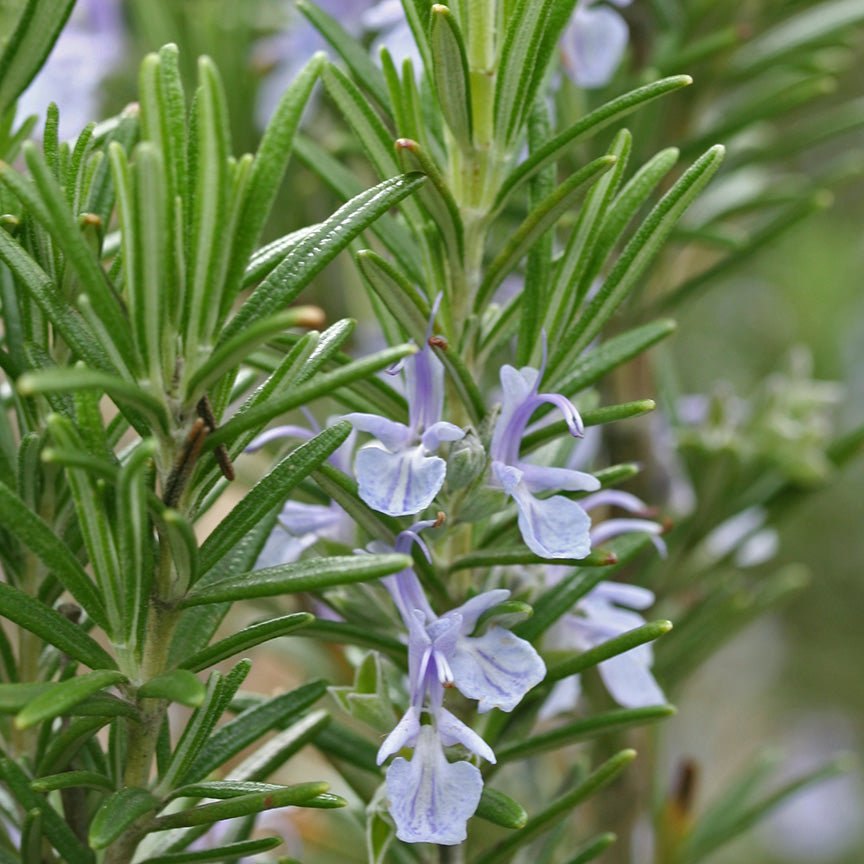
Salvia rosmarinus ct. camphor
Hương thảo ct. camphor · Lamiaceae
Conifer needles, camphor, a little wood. Sharp at the top and dry throughout, closer to eucalyptus than to a kitchen herb.
This is the camphor-rich chemotype. The same species also gives a verbenone chemotype, much softer and greener, and a 1,8-cineole chemotype, astringent and bright. Three versions carry the same botanical name but smell like three different plants.
Rosemary is therefore the clearest lesson in chemotypes. A label that says only “rosemary” without a chemotype has not told you everything, and the lot analysis is the only way to know which one you are holding.
- Plant part
- Whole plant
- Chemotype
- ct. camphor
- Vietnamese name
- Hương thảo ct. camphor
- Scent family
- Medicinal
- Plant family
- Lamiaceae
- Lots published
- —
Published lots
No lots yet. When the first lot arrives, its GC/MS analysis will be published here — unedited, with the lot number printed on the bottle label.
Buy Rosemary ct camphor
This oil is in the catalogue but no lot has been brought in, so it is not on sale yet. Message us if you need it — what we stock next depends on what buyers ask for.
Elsewhere in the catalogue
No lot of this oil yet. The oils below are close to it botanically or in how they are extracted — some of them already have lots.
Same plant family: Lamiaceae Lavandin · Lavender · Melissa · Oregano · Peppermint · Rosemary ct verbenone · Sweet marjoram · Vietnamese balm
Also from the whole plant Davana · Hyssop ct 1,8-cineole · Japanese mint · Oregano · Rosemary ct verbenone · Sweet marjoram · Tarragon · Vietnamese balm
Same method: direct steam distillation Chinese cassia · Cypress · Frankincense frereana · Lemon myrtle · Pink pepper · Roman chamomile · Rosemary ct verbenone · Star anise