Essential oils · Medicinal family
Spike lavender essential oil
Lavandula latifolia
Oải hương lá rộng · Lamiaceae
Lavender, but harsher and cooler, with camphor and eucalyptus clear at the top. The sweet floral part steps back.
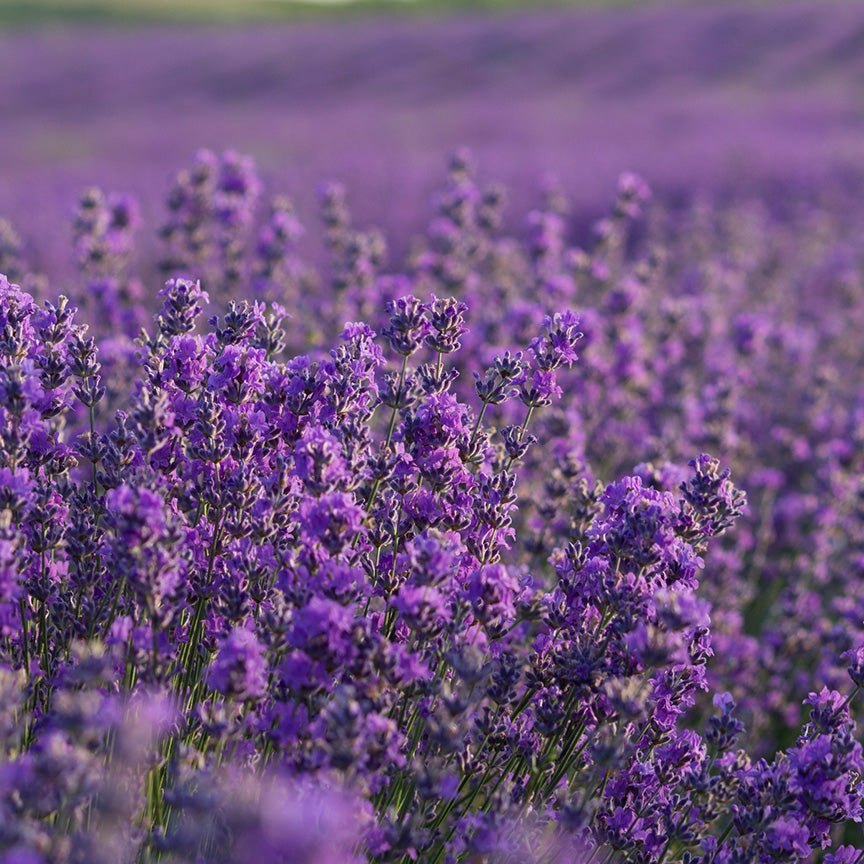
Spike lavender (Lavandula latifolia) grows in the lower, hotter parts of Spain. Its oil has linalool like true lavender, but adds plenty of 1,8-cineole and camphor, with almost no linalyl acetate.
It is one of the two parents of lavandin. Lavandin’s camphor and cineole are exactly what it inherits from this species. Being rich in camphor and cineole, it is not as gentle as true lavender and should not be used near the face of young children.
- Plant part
- Flowers
- Vietnamese name
- Oải hương lá rộng
- Scent family
- Medicinal
- Plant family
- Lamiaceae
- Lots published
- —
 Flowers
Composition profile
The composition in the article, read as structure: 6 compounds, each with its chemical class and note. The article gives only a standard’s permitted ranges, not measurements.
| Compound | Level | Class | Note |
|---|---|---|---|
| Linalool EU | 34.0–50.0 % | Alcohols | Middle |
| 1,8-Cineole | 16.0–39.0 % | Oxides | Top |
| Camphor EU | 8.0–16.0 % | Ketones | Middle |
| Limonene EU | 0.5–3.0 % | Monoterpenes | Top |
| trans-α-Bisabolene | 0.4–2.5 % | — | — |
| α-Terpineol EU | 0.2–2.0 % | Alcohols | Middle |
No group totals: these are a standard’s permitted ranges, and adding ranges does not give the composition of any real sample.
Compare with the 2 chemically closest oils Which other oils are rich in Linalool?
Spike lavender by the standard
Spike lavender (Lavandula latifolia) grows in the hot, dry lowlands of Spain. The international standard for its oil is ISO 4719:2012, Spanish type. Its main composition table:
| Compound | ISO 4719 range |
|---|---|
| Linalool | 34.0–50.0% |
| 1,8-Cineole | 16.0–39.0% |
| Camphor | 8.0–16.0% |
| α-Terpineol | 0.2–2.0% |
| Limonene | 0.5–3.0% |
| trans-α-Bisabolene | 0.4–2.5% |
| Linalyl acetate | not detected to 1.6% |
How it differs from true lavender
According to the 2024 scientific opinion of the European Food Safety Authority (EFSA), true lavender has linalyl acetate at 25–47% and linalool at 20–45%, while camphor and 1,8-cineole in the seven batches analysed were only about 0.2–1.5%.
Side by side, the difference is stark:
- True lavender is rich in linalyl acetate, the ester behind its sweet, soft, slightly fruity side. Spike lavender has almost none.
- Spike lavender is rich in 1,8-cineole and camphor, two cool, camphoraceous, eucalyptus-like compounds. True lavender has almost none.
So spike lavender smells sharper and more “medicinal”, with clear camphor at the top and the floral part pushed to the back. Linalool is the only compound the two share in quantity.
A parent of lavandin
Spike lavender is one of the two parents of lavandin. The hybrid inherits camphor and cineole from spike lavender and linalyl acetate from true lavender. Smelling the three in order, true, lavandin, spike, is the quickest way to hear the camphor rise.
Each area its own proportions
A 2023 study in Plants followed four spike lavender ecotypes grown in Murcia, Spain, over three years. Averaged across years, linalool ranged from 8.7% to 47.5% and 1,8-cineole from 27.1% to 62.1% depending on ecotype. The authors note that the chemotype defined by 1,8-cineole, linalool and camphor remained stable over time. Some samples had cineole well above the ISO maximum, meaning not every lot sold as spike lavender falls within the standard.
Safety
Oils rich in cineole and camphor are not suitable for use near young children’s faces. Linalool and limonene are on the EU list of cosmetic ingredients that must be labelled above a threshold. Always dilute before use on skin, and see the page on children and pregnancy.
Sources
- ISO 4719:2012. Essential oil of spike lavender (Lavandula latifolia Medikus), Spanish type.
- Caceres-Cevallos G.J., Quilez M., Ortiz de Elguea-Culebras G. et al. (2023). Agronomic Evaluation and Chemical Characterization of Lavandula latifolia Medik. under the Semiarid Conditions of the Spanish Southeast. Plants 12(10), 1986. doi:10.3390/plants12101986
- EFSA FEEDAP Panel (2024). Safety and efficacy of a feed additive consisting of an essential oil derived from the flowering tops of Lavandula angustifolia Mill. (lavender oil) for use in all animal species. EFSA Journal 22(10). doi:10.2903/j.efsa.2024.9017
Buy Spike lavender
Spike lavender oil: no lot has been brought in yet, so it is not on sale. Message us if you need it.
Where you may already have smelled it
According to the analyses cited above, this oil contains up to 50 % linalool and up to 39 % 1,8-cineole. Both are also the leading compound in the scenes below from the scent dictionary. Smelling one of those scenes again is a way to get to know them without opening a bottle. A shared compound does not mean the oil smells exactly like the scene.
- Toasted coriander seedToast a spoonful of coriander seed in a dry pan until fragrant, crush lightly and smell
- Pomelo blossomA cluster of freshly opened pomelo blossom, smelled from about a hand’s span away
- White champacaA white champaca flower held in your palm for a few minutes
- CajuputPut a drop of cajeput oil on a smelling strip and smell after thirty seconds
Chemically close
The oils whose published composition is closest to this one, compared across every compound we could read. Close in composition does not mean the scent is identical or that one can replace the other.
Further reading
Close to Spike lavender
Same plant family: Lamiaceae Bee balm · Clary sage · Cornmint · Lavandin · Melissa · Peppermint · Perilla · Rosemary ct camphor
Also from the flowers Blue tansy · Clary sage · Clove bud · Immortelle Madagascar · Jasmine sambac · Moroccan blue chamomile · Roman chamomile · St John’s wort
Same method: direct steam distillation Ceylon cinnamon · Engelmann spruce · Fokienia · Geranium · Indian bay leaf · Juniper berry · Oregano · Thyme ct thymol
Quick answers
What does spike lavender essential oil smell like?
Lavender, but harsher and cooler, with camphor and eucalyptus clear at the top. The sweet floral part steps back.
What is the botanical name of spike lavender oil?
The plant is Lavandula latifolia, in the Lamiaceae family. In Vietnamese it is called oải hương lá rộng.
How is spike lavender oil produced?
From the flowers of the plant, by direct steam distillation. See the method for what that does to the oil.
What are the main compounds of spike lavender oil?
From the composition data on this page, the oil is led by Linalool, 1,8-Cineole and Camphor. Proportions vary with origin, harvest and method; a lot analysis is the only answer for a given bottle.
Last updated